What Makes PVC Edgebanding Flexible? A Conversation About Plasticizers
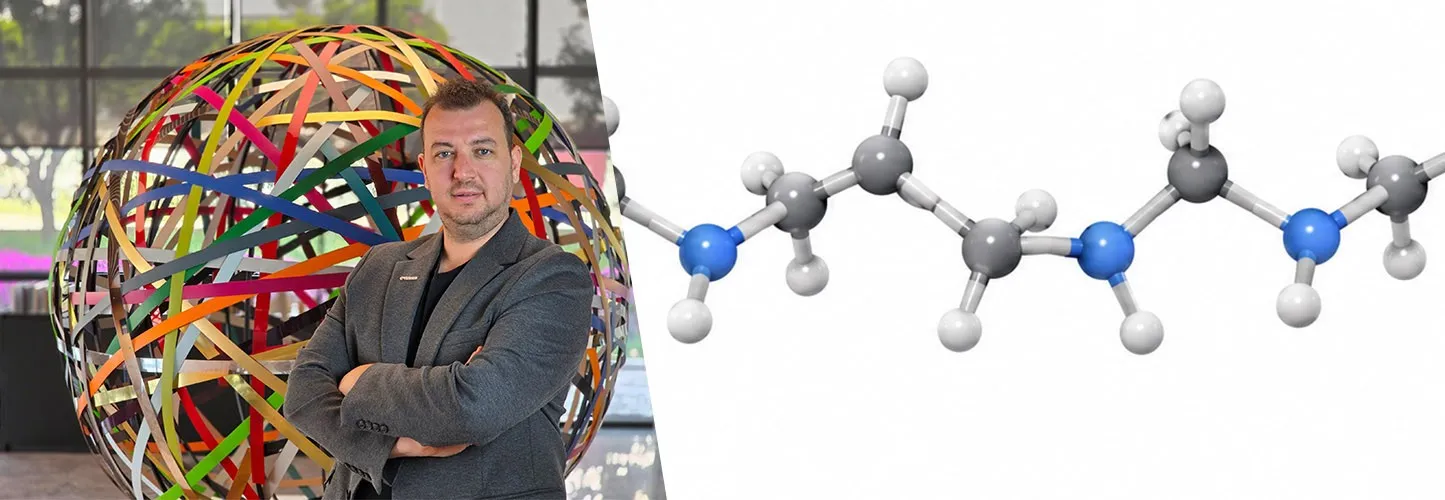
In Part III of our ongoing interview series, TECE R&D Manager Ertuğ breaks down how plasticizers work, which types are in use today, why the industry moved away from phthalates, and what the future of PVC formulation actually looks like.
Episode III of the TECE R&D Interview Series, filmed at the TECE factory in Bursa.
What a Plasticizer Actually Does
PVC in its raw state is a hard, brittle material. Left on its own, it would be useless for edgebanding — impossible to trim, bend, or apply. The plasticizer is what makes it workable.
“When you think of PVC on its own, it is actually a rigid and brittle material. What converts it into the flexible, bendable, and machinable edgebanding we know is the plasticizer. It inserts itself between polymer chains and weakens the secondary bonds — the attractive forces — between them. This allows the chains to slide past each other more freely. The result is a lower glass transition temperature: the material softens and gains flexibility. But it does not form a chemical bond. It is physically trapped — and if you choose the wrong one, it will migrate to the surface over time, cause sweating, and may change the color.”
Two main groups cover the majority of plasticizer usage in PVC edgebanding today. Primary plasticizers — such as dioctyl terephthalate (DOTP) — provide the core softening effect. Secondary plasticizers — such as epoxidized soybean oil (ESBO) — play a supporting role, working alongside the primary to stabilize the material during processing.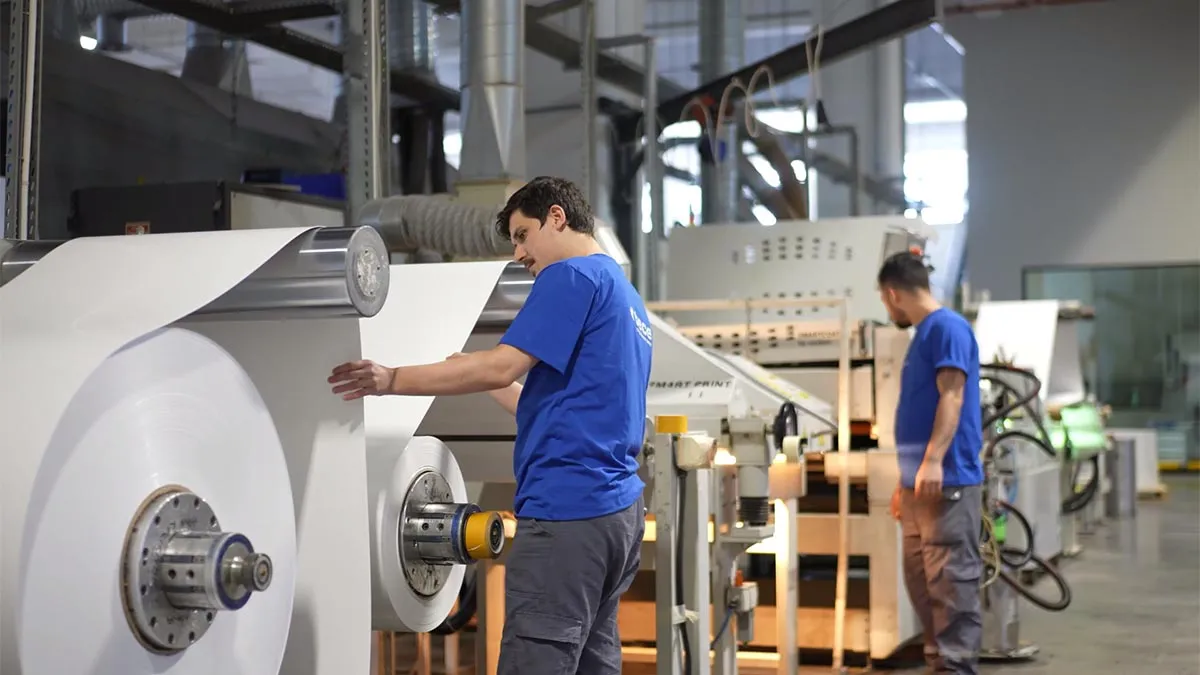
The Shift Away from Phthalates
The industry did not always use DOTP. For decades, ortho-phthalate-based plasticizers — dioctyl phthalate (DOP) and diisononyl phthalate (DINP) — were the standard. They were cheap, efficient, and compatible with virtually every processing line.
“Phthalate-based plasticizers like DOP were widely used for a long time. Their use declined entirely due to health regulations and compliance pressure. In the edgebanding sector, not only DOP but also DINP was in use. These were ortho-phthalate derivatives — inexpensive, high-performing, and compatible with any machine. But they were placed on the Substances of Very High Concern list because of their effects on reproductive health. Especially for interior furniture — products people are in constant contact with — they became unacceptable.”
The replacement was a structural cousin, not a wholesale departure. Dioctyl terephthalate is chemically an isomer of the old phthalates — but it is a terephthalate, not an ortho-phthalate. That structural difference removes the health burden entirely.
“DOTP is free of phthalates, REACH-compliant, and safe for indoor use. You can think of it as the clean version of DOP.”
DOTP vs. ESBO: Two Different Roles
The comparison between DOTP and ESBO is not a competition. They are designed to do different things — and in a well-formulated product, they work together.
DOTP is the primary plasticizer: it delivers the softening, the low-temperature flexibility, the resistance to hardening over time. Its volatility is low, which means the plasticizer stays in the material rather than escaping to the surface. Products formulated with DOTP remain flexible in cold conditions and do not stiffen with age.
ESBO plays a dual role — and it is that duality that makes it genuinely valuable rather than simply a secondary input.
“Epoxidized soybean oil has a dual identity. It is fully plant-based and renewable. But its real function is that it behaves as a plasticizer while working as a secondary stabilizer. When PVC is processed under heat, it tends to release hydrochloric acid, which can trigger a chain degradation. The epoxy groups in the ESBO molecule capture that released acid and neutralize it — so it softens and protects in one step. On top of that, it is approved for food contact and has a very clean toxicological profile.”
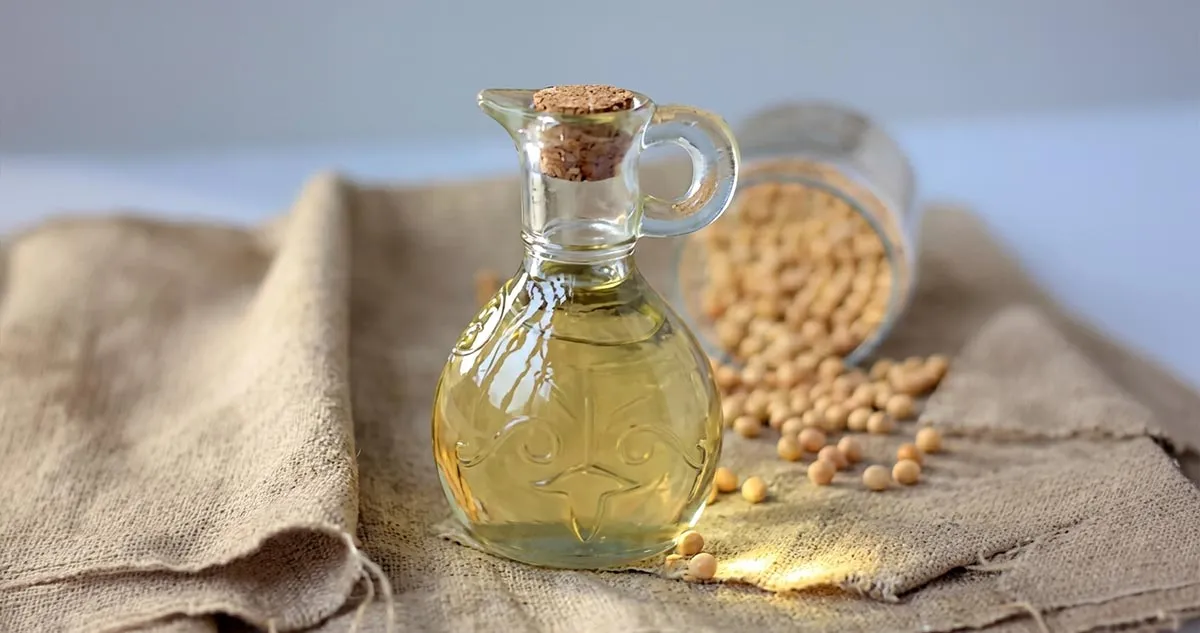
In production terms, this means ESBO can reduce the amount of primary heat stabilizer required in a formulation — which has a real impact on total cost. Looking at ESBO's price in isolation, without accounting for the stabilizer it partially replaces, leads to a false reading of the economics.
Performance Differences That Matter in the Field
DOTP's strength is permanence. Its low volatility means the plasticizer does not leave the material over time. The product stays flexible, performs well in cold climates, and resists the kind of gradual hardening that appears in lower-quality bands after prolonged use.
ESBO's advantage is surface stability: it is highly resistant to migration, which means no blooming — the white residue that can appear when plasticizer migrates to the surface — and strong resistance to tackiness and dimensional creep over time.
One misconception Ertuğ addresses directly: more plasticizer is not better.
“The idea that more plasticizer means a better product is wrong. Too much does the opposite — it drops the glass transition temperature too far, causes migration to the surface, creates sweating, and makes the tape sticky. The right amount, correctly selected, is what produces quality.”
Other Plasticizer Types in Brief
Beyond DOTP and ESBO, Ertuğ outlines four other plasticizer families used in more specialized applications.
Acetyl tributyl citrate (ATBC) — bio-based, food-contact approved, valuable for sustainability-focused projects. More expensive and more volatile; typically blended rather than used alone.
Trimellitates (TOTM) — extremely low volatility, exceptional long-term thermal resistance. Specified for high-temperature applications; cost is correspondingly high.
Adipates and sebacates — excel at cold-temperature flexibility, preventing brittleness. Used in small amounts alongside a primary plasticizer.
Polymeric plasticizers — maximum permanence and migration resistance. Specified where edgebanding must never transfer plasticizer to adjacent materials. Lower processing efficiency, higher cost.
The Direction the Industry Is Heading
“We are moving toward renewable, bio-based, and low-migration plasticizers. Environmental regulations tighten every year, and customers increasingly want green solutions. Plant-based materials like ESBO may grow in share, and new-generation bio-plasticizers will emerge alongside them. DOTP will remain in the field for a long time as the phthalate-free backbone — because its performance-to-cost balance is still very strong.”
What TECE Guarantees on Content
Plasticizer selection at TECE is not just a performance decision. It is also the foundation of a compliance commitment.
“At TECE, regardless of which plasticizer we choose for any of our edgebanding products, we guarantee that our products do not contain cadmium or cadmium compounds, polybrominated biphenyls, chlorinated paraffins, polychlorinated biphenyls, polychlorinated naphthalenes, organic tin compounds, asbestos, azo compounds, per- and polyfluoroalkyl substances, or formaldehyde. The real logic behind our choice of DOTP and ESBO is this: choosing the right plasticizer is not just about adjusting flexibility — it is about being able to sign that declaration with complete confidence.”
To learn more about TECE's edgebanding materials and formulation standards, get in touch with the TECE team.