
Which Edgebanding Width Should You Order?
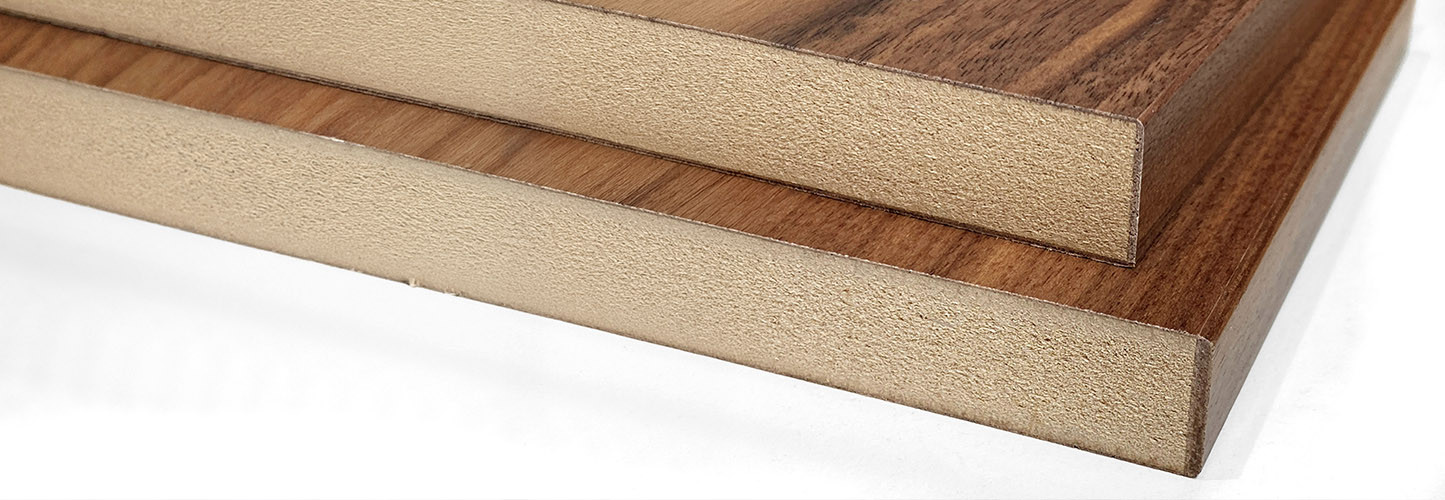
It is one of the most common questions our sales team hears: “Which width should I order?” The answer is simple, and getting it right saves material, time and trimming problems on the line.
The rule: a little wider than your panel
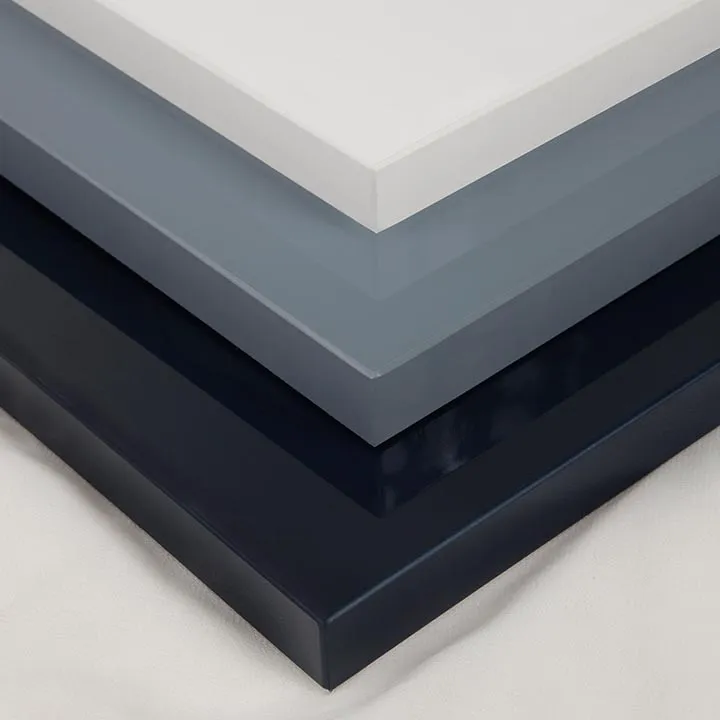
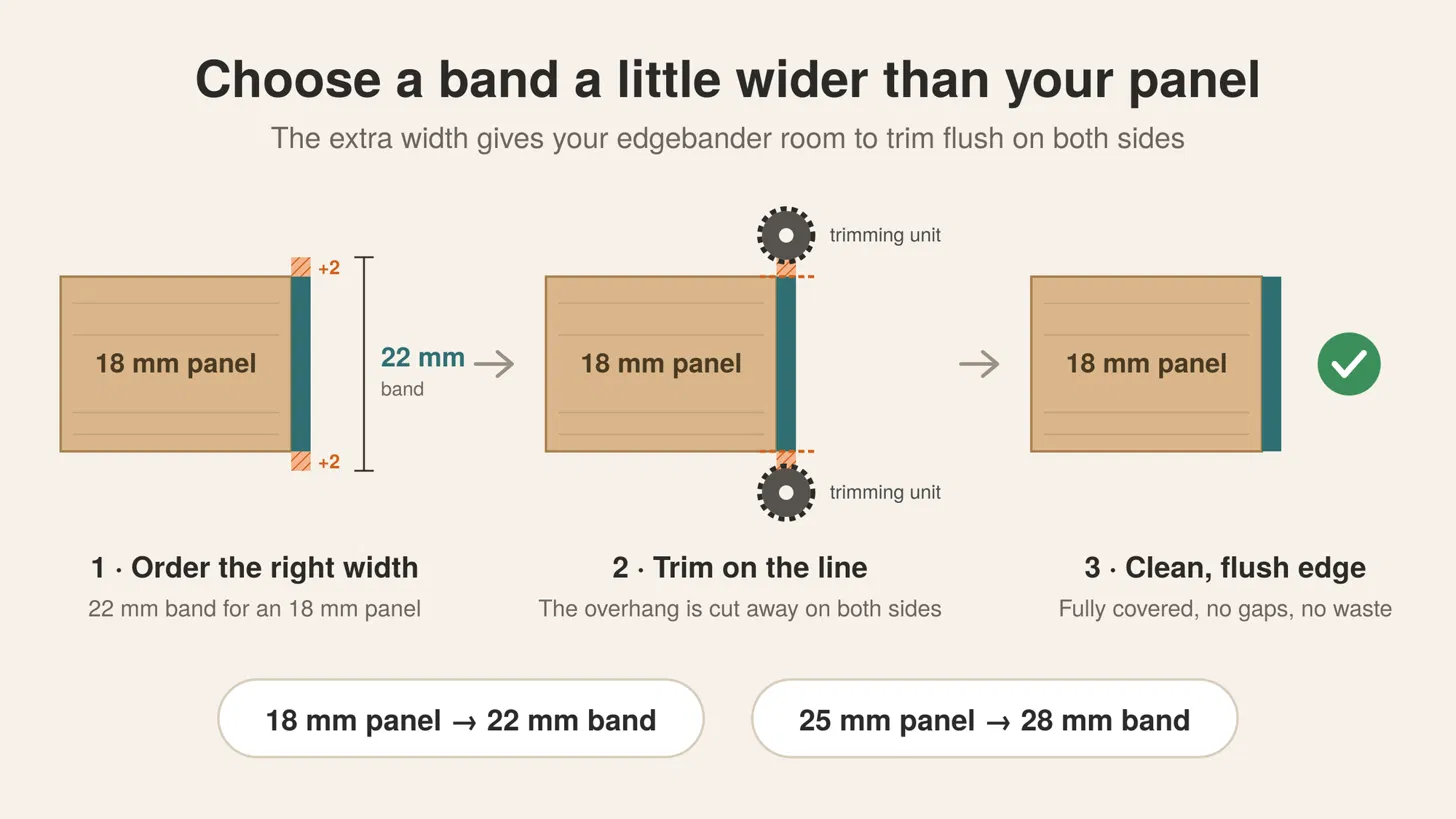
Always order edgebanding a few millimeters wider than the thickness of your panel. The extra width gives your edgebander room to trim the band flush on both sides, so the edge is fully covered and the finish is clean.
- 18 mm panel → 22 mm edgebanding is the most common choice.
- 25 mm panel → 28 mm edgebanding is a typical match.
If the band is too narrow, part of the edge can stay uncovered after trimming. If it is much too wide, you pay for material that ends up as waste, and your trimming units work harder than they need to.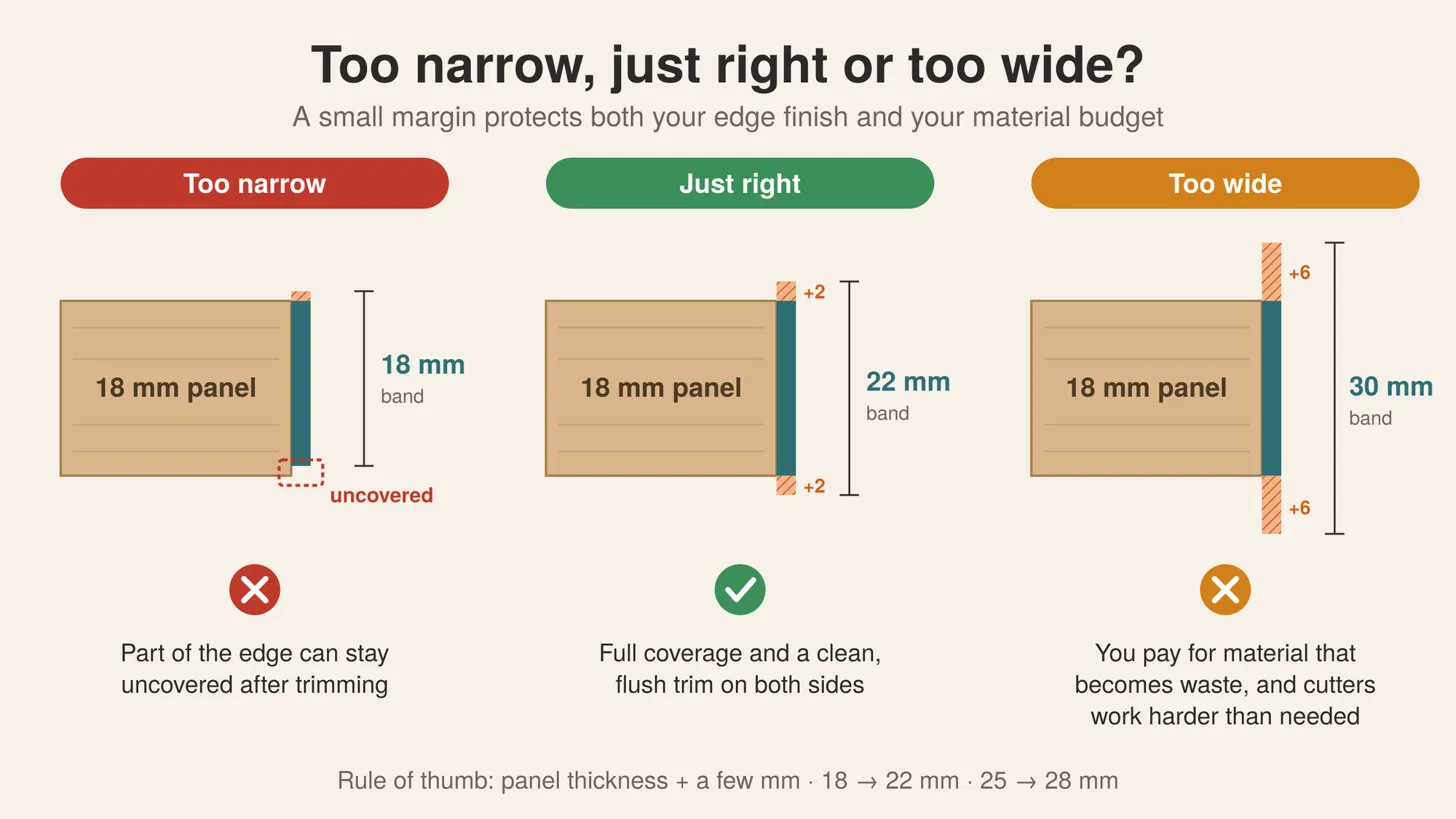
Thickness: think about where the edge lives
Thin bands (0.4–0.8 mm): good for shelves, carcass parts and edges that see little contact.Thicker bands (1–2 mm): better for doors, fronts, worktops and any edge that is touched, cleaned or knocked every day.
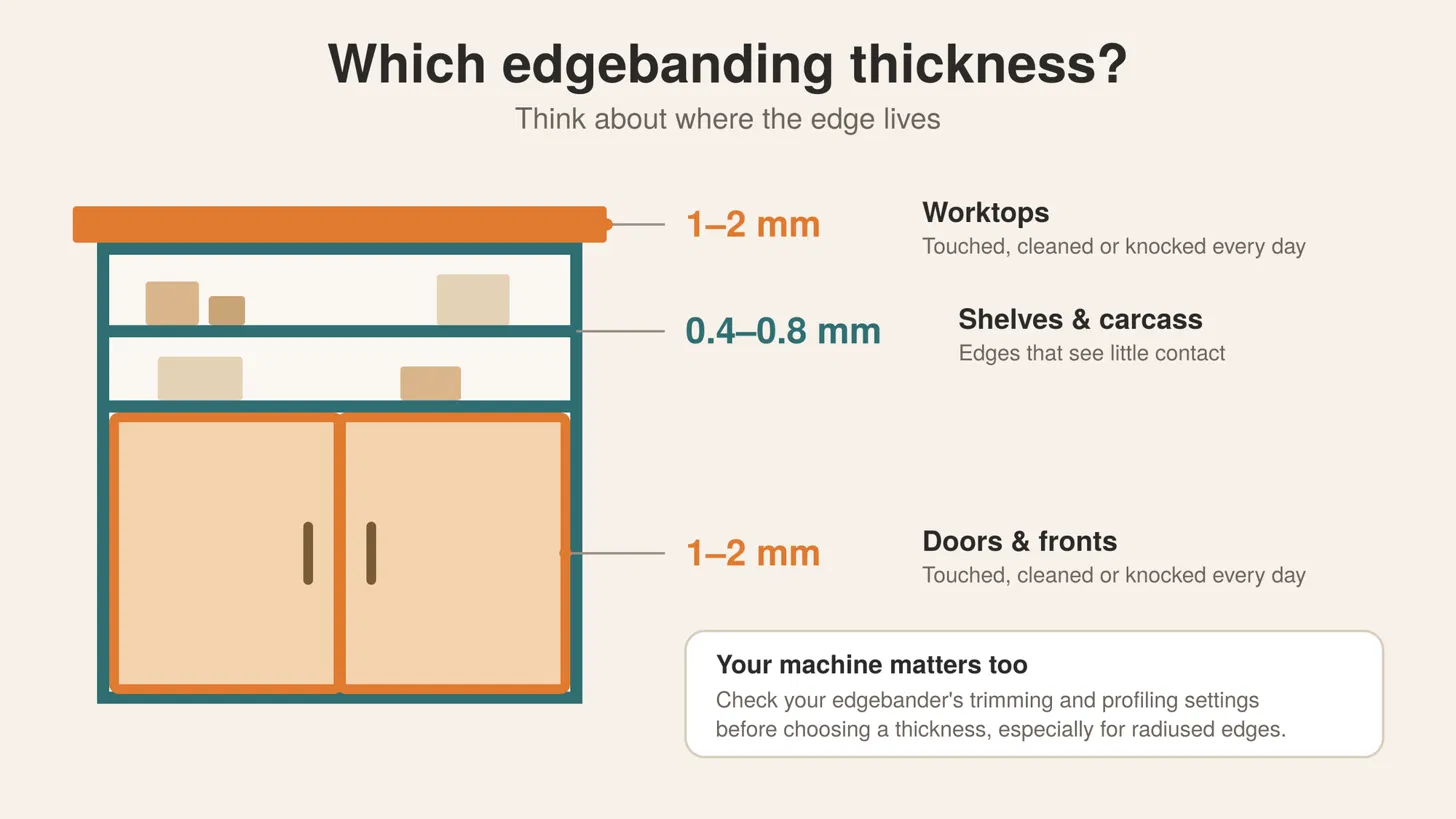
Your machine matters too. Check your edgebander's trimming and profiling settings before choosing a thickness, especially if you round the edges with a radius.
Matching the color is the easy part
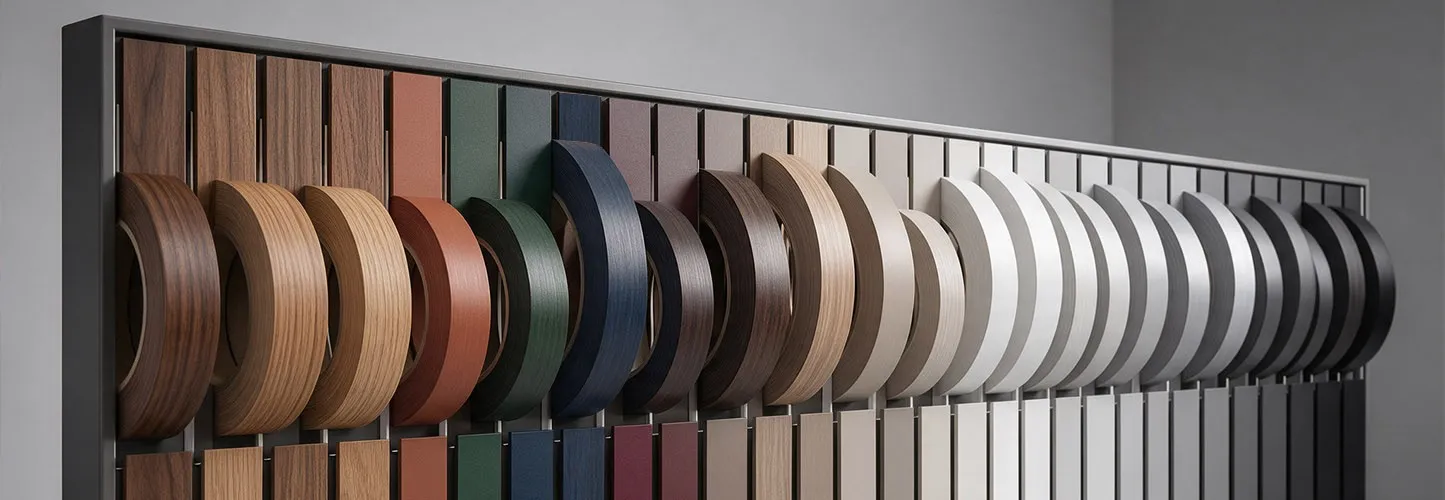
Once you know the width and thickness, finding the right décor takes seconds. With EdgeFinder on our website, you can search by your panel maker's code for example, a Kronospan code and find the matching Tece edgebanding. Have a long list? The Bulk Edge Finder lets you search many codes at once.
Still not sure?
Send us your panel code and panel thickness, and our team will recommend the right width and thickness for your application.